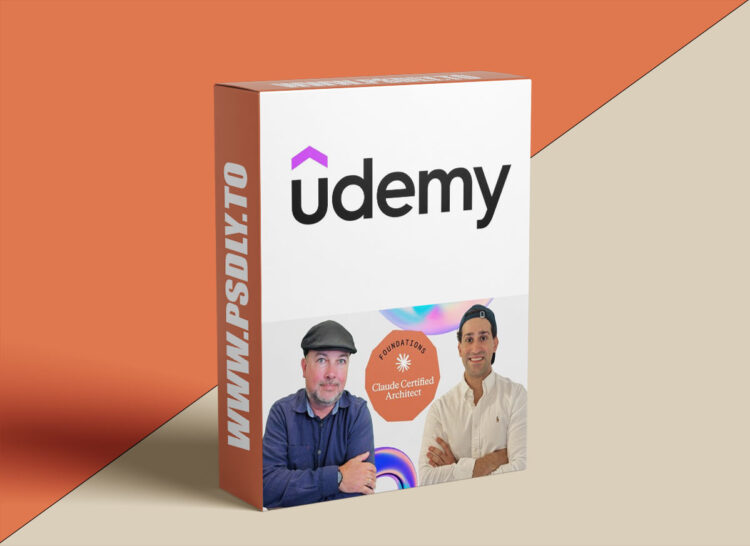
Ultimate Anthropic Claude Certified Architect – Foundations prepares you for the CCAR-F exam with hands-on labs, 2 full-length practice exams, and in-depth video instruction. Building with Claude in production takes more than knowing the API or writing a good prompt. The Anthropic Claude Certified Architect – Foundations exam tests sound architecture and implementation decisions for real-world Claude systems. That includes agentic loops, tool design, MCP integration, Claude Code configuration, structured output, context management, reliability, human review, and production tradeoffs.
Please note: Claude certifications are currently available only to employees of Anthropic partner organizations. (It’s easy to sign your company up, though.)
This is not a trivia course. The exam is scenario-based, and this course is built the same way. You will learn how to reason through realistic production situations and choose the most appropriate architecture, configuration, or implementation pattern.
You will learn how to:
- Design agentic loops that use stop_reason, tool calls, tool results, and termination conditions correctly
- Build multi-agent systems using coordinator and subagent patterns
- Pass context between agents without losing attribution, constraints, or source metadata
- Use hooks, prerequisite gates, and structured handoff patterns when prompt guidance is not enough
- Design effective tools with clear descriptions, schemas, boundaries, and structured error responses
- Build and integrate MCP servers into Claude Code and agent workflows
- Configure Claude Code for team use with markdown files, path-specific rules, skills, slash commands, and permission modes
- Use plan mode, direct execution, iterative refinement, and CI/CD workflows appropriately
- Engineer prompts with explicit criteria, few-shot examples, structured output, JSON schemas, validation, retries, and feedback loops
- Design batch processing, multi-pass review, and multi-instance review strategies
- Manage context windows as a budget across long sessions, large codebases, documents, summaries, and handoffs
- Make reliability decisions around uncertainty, escalation, provenance, conflicting sources, and human review






